
A Review of Neonatal Tetanus Seen in Rasheed Shekoni Specialist Hospital, Dutse, Jigawa State, Nigeria
Main Article Content
Keywords
Tetanus, Neonate, Jigawa
Abstract
Background: Neonatal tetanus is a major contributor to neonatal mortality in developing countries. The study aimed to identify the prevalence, routes and mortality rate among newborns with tetanus admitted to the Special Care Baby Unit (SCBU) of Rasheed Shekoni Specialist Hospital (RSSH), Dutse Jigawa State, Nigeria.
Materials and Methods: The study was retrospective hospital-based. Neonates less than one-month-old, with a diagnosis of tetanus and who were admitted into SCBU from January 2016 to December 2018 were included. Their medical records were retrieved and analyzed. Data were analysed using SPSS version 16. Ethical clearance was obtained from RSSH.
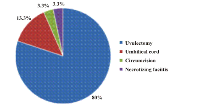
Results: There were 36 cases of neonatal tetanus admitted over the 3 years under review. This represented 4.30% of the total admission into the unit in the same period. Thirty cases (83.33%) had complete records for analysis. There were 20(66.7%) males, while the male: female ratio was 2:1. The age range was 6 to 22 days, and the mean age of 10.70±4.69 days. Only 28.6% of the mothers received tetanus toxoids during antenatal care. The major route of entry was traditional uvulectomy (80.0%). Twelve (40.0%) babies were discharged home. The mortality rate was 53.3%.
Conclusion: Traditional uvulectomy is the major route of entry for neonatal tetanus. The mortality rate is still high.
Article Sidebar
Article Details

This work is licensed under a Creative Commons Attribution-NonCommercial-ShareAlike 4.0 International License.
This is an open-access journal and articles are distributed under the terms of the Creative Commons Attribution Non-Commercial Share-Alike License 4.0. This licence allows users to download and share, remix, tweak and build upon the article for non-commercial purposes, so long as the original authorship is acknowledged and the new creations are licensed under identical terms.