
Is the training, knowledge, and perception of maternal health providers adequate for the provision of respectful maternity care? Policy implications for practice in a Nigerian tertiary hospital
Main Article Content
Keywords
Respectful Maternity Care, Childbirth, Mistreatment, Maternal Health, Nigeria
Abstract
Background: Health providers play pivotal roles in achieving respectful maternity care (RMC). This study assessed the training, knowledge, and perception of respectful maternity care among maternal health providers in a Nigerian tertiary hospital.
Methodology: This was a cross-sectional study conducted among 156 maternal health providers in Ebonyi Nigeria. Self-administered questionnaires were used for data collection.
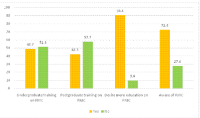
Results: The respondents had a mean age of 31.97±6.8 years. Females constituted 35.9% of the respondents while 25.6% were midwives. Less than half had received undergraduate (48.7%) and postgraduate (42.3%) training on RMC. The majority were aware (72.4%), and had good knowledge (78.8%) of respectful maternity care. Medical books (33.3%) were the major source of information on RMC. Most respondents (90.4%) desired more education on RMC. Over four-fifths (82.1%) had a positive perception of RMC. Only 27.6% of respondents agreed that mistreatment during childbirth was a common phenomenon in their clinical practice context. About three-fourths (76.6%) did not agree that mistreatment during childbirth was harmful to maternal health. Undergraduate training on RMC (AOR=0.33, 95% CI=0.13-0.81), postgraduate training on RMC (AOR=0.30, 95% CI=0.11-0.82) and higher monthly income (AOR=0.20 95% CI=0.05-0.88) were predictors of awareness of RMC. Knowledge of RMC was a predictor of perception about RMC (AOR=0.29, 95% CI=0.11-0.71).
Conclusion: There was good awareness, knowledge and perception of RMC predicted by training exposures and income status However, gaps existed in the perception of the occurrence and consequences of mistreatment during childbirth. We recommend the inclusion of RMC training in both undergraduate and postgraduate medical training curricula.
Article Sidebar
Article Details

This work is licensed under a Creative Commons Attribution-NonCommercial-ShareAlike 4.0 International License.
This is an open-access journal and articles are distributed under the terms of the Creative Commons Attribution Non-Commercial Share-Alike License 4.0. This licence allows users to download and share, remix, tweak and build upon the article for non-commercial purposes, so long as the original authorship is acknowledged and the new creations are licensed under identical terms.